
As the winter chill sets in, electric vehicle owners face unique challenges in maintaining optimal performance and range. However, with a few strategic considerations, you can ensure a comfortable and efficient winter driving experience.
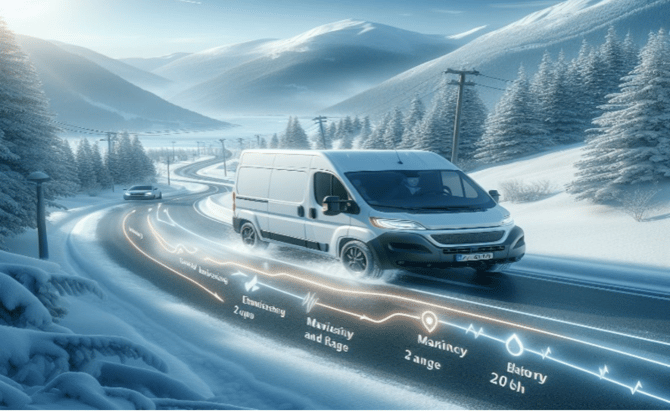
1. Preheat Before You Leave: One notable advantage of plug-in electric vehicles during winter is their ability to leverage grid power before hitting the road. Rather than depleting precious battery range, it is advisable to prepare for your journey while still connected to the grid. Many electric vehicles offer the option to preheat the cabin while charging. This not only ensures a toasty warm interior but also minimizes the energy required to maintain a comfortable temperature during your drive. Additionally, utilizing seat heaters, if available, proves more efficient in directly warming occupants, further conserving energy.
2. Turn Off Regenerative Braking: While regenerative braking is a remarkable feature for recouping energy and extending driving range, it can pose challenges on slippery winter roads. The system, which normally engages when the driver lifts their foot off the accelerator pedal, may cause erratic handling on slick surfaces as the system relies on the friction between the tires and the road surface. To mitigate this issue, it is recommended to turn off the regenerative braking system or at least set to low in such conditions and revert to using the traditional (friction based) brake pedal.
3. Your Range May Vary: The impact of cold weather on electric car battery life varies depending on the vehicle. Older electric vehicles with limited range necessitate careful power management, considering factors like headlights, wipers, radio, seat heaters, battery heaters, fans, and power steering, all of which draw from the battery. On the other hand, newer electric vehicles with extended ranges provide more flexibility. If your daily trips are short, there's no need to skimp on power, assuming you recharge at the end of the day.
4. Additional Tips for Efficient Winter Driving:
- Opt for heated seats and steering wheel over cabin heating to significantly reduce energy consumption. According to experts, heating the cabin may require 5000 watts and much more when trying to heat the rear of a vehicle as well, whereas heating the seat and wheel together only requires 55 watts, a substantial difference.
- If your vehicle has a bulkhead door to protect the driver from the potential of moving objects in the rear, ensure to keep the door closed so you are only heating the front cabin, and not the whole interior of the vehicle.
- Keep your tires properly inflated, as electric vehicles tend to be heavier than internal combustion engine vehicles. Maintaining optimal tire pressure becomes crucial in ensuring efficient winter driving.
By incorporating these winter driving tips, electric vehicle owners can maximize efficiency, preserve battery life, and navigate the challenges of cold weather without compromising comfort or range.
Understanding Cold Weather Impact on EV Range
CAA's large-scale winter test on the Ottawa to Mont Tremblant route, conducted at -7 to -15 degrees Celsius, measured 14 electric vehicles against their Natural Resources Canada estimated range. Results showed EVs lose range of between 14 and 39 percent compared to official NRCan figures under the same conditions. The Chevrolet Silverado EV and the Polestar 2 were the best-performing models, each losing only 14 percent, while some ev models lost close to 40 percent. In cold climates like Canada, the official range and predicted range figures serve as a starting point rather than an operating guide. Most EVs fall somewhere between those extremes, with actual results depending on battery chemistry and how much energy the HVAC system requires to heat the cabin.
The reason EVs lose range in cold temperatures is battery chemistry. Lithium-ion cells require their ideal temperatures to deliver full capacity. In sub zero, freezing, or frigid temperatures, the electrolyte inside the battery pack becomes more viscous and internal resistance rises, slowing the chemical reactions that produce electrical current. EV batteries can deliver less power in cold conditions as a result. This effect is temporary. Once the battery reaches its optimal battery temperatures, battery performance and capacity return to normal. Cold weather does not permanently damage battery cells under normal operating conditions.
Unlike a gas car, which redirects engine waste heat to warm the interior at no extra fuel efficiency cost, an electric vehicle must convert stored battery power directly into cabin heat. The HVAC system and battery warmer together account for a substantial share of winter energy usage, directly affecting how much range remains available for driving.
Battery Preconditioning, Cabin Temperature, and Heat Pump Technology
Managing battery temperature and cabin temperature before departure is the most effective way to reduce winter range loss. When the vehicle is still plugged in and the EV plugged status is confirmed in the app, preconditioning uses grid electricity rather than stored battery charge to bring the pack to its optimal operating temperature and warm the cabin to the target cabin temperature before the drive begins. Starting each trip with the battery already at its optimal battery temperatures means significantly less energy usage goes to heating during the drive itself.
Real world testing shows preconditioning improves cold-weather energy efficiency by 5 to 10 percent compared to departing with a cold battery. Drivers should keep their EV plugged in overnight and use departure time scheduling so the vehicle reaches its optimal operating temperature before setting off. Vehicles with a heat pump have a clear advantage over those using a resistive cabin heater. A heat pump is far more energy efficient, transferring thermal energy from the outside air into the cabin using less energy than direct resistive heating. EVs with heat pumps retain 10 to 30 percent more range in cold weather. Using heated seats and steering wheel as the primary source of personal warmth rather than running the cabin heater at full output is one of the simplest ways to conserve battery power. Battery health is also supported by avoiding deeply depleted battery charge levels in extreme cold.
Winter Tires and Cold Weather Charging for Electric Vehicles
Switching from summer tires or all season tires to dedicated winter tires is essential before cold weather arrives. Summer tires harden below 7 degrees Celsius, reducing grip on snow and ice. All season tires are not rated for severe winter conditions that dedicated winter tires handle. Electric motors deliver high torque at low speed, which can overwhelm a tire compound not designed for winter traction on snow and ice. Rolling resistance matters more for EVs, and lower rolling resistance directly improves energy efficiency and reduces range loss. The Nokian Hakkapeliitta R5 EV is designed specifically for electric vehicles. The Michelin X-Ice Snow is optimized for lower rolling resistance to conserve battery power. The Bridgestone Blizzak LM005 is compatible with electric vehicles and delivers strong traction on snow and ice in winter conditions.
As temperature drops through winter, tire pressure decreases at approximately one PSI for every six degrees Celsius. Weekly tire pressure checks are recommended, as low pressure increases rolling resistance and range loss. Before departure, remove excess snow from the roof and hood to reduce aerodynamic drag.
Using a DC fast charger in cold weather may result in slower initial charging speeds until battery temperature reaches its optimal operating range. This is a designed protection mechanism that preserves long-term battery health, not a fault.
EV Winter Driving Tips for Fleet Operators
The ev winter driving tips most important for ev owners and fleet operators are: precondition every vehicle while still plugged in, use departure time scheduling, equip vehicles with EV-specific winter tires, and train drivers on cabin temperature management to conserve battery power.
Real world range in Canadian winters will fall below predicted range for most ev models. Fleets operating the Chevrolet Silverado EV, Chevrolet Equinox EV, or any Tesla Model should plan routes with a 20 to 25 percent reduction from official NRCan figures in moderate cold. Electric motors have significant advantages over gas car engines in cold weather reliability, but energy efficiency remains the main operational focus in cold climates. Drivers who use heated seats and a heated steering wheel, keep a moderate cabin temperature, and remove excess snow from the vehicle before departure will get as much range as possible and help maximize ev performance across the fleet. For winter range planning or driver training, contact 7Gen support below.
DO YOU HAVE AN ISSUE THAT REQUIRES FURTHER ASSISTANCE?
Please, do not hesitate to contact us through:
- 7Gen Customer Support Portal. By clicking here you can find instructions on how to create an account within our support center.
- Email: support@7gen.com
- Emergency line / 24/7 Call Support: +1 855 743 6938